Home / Articles
What to Expect with IOL Implants: A Step-by-Step Breakdown
Home / Articles
What to Expect with IOL Implants: A Step-by-Step Breakdown
There are few things as precious as the ability to see clearly. Yet for many people, especially those over the age of 50, the natural lens inside the eye begins to cloud — a process we know as cataract formation. At first, the symptoms might feel subtle: needing brighter light to read, noticing glare from headlights at night, or realizing colors don’t look as vivid as before. Over time, however, cataracts make it feel as if the world is covered in a constant haze.
Cataract surgery with intraocular lens (IOL) implants is the modern solution to this problem. It is not only one of the most common surgeries in the world but also one of the safest and most effective. The replacement of the cloudy natural lens with a clear artificial one allows patients to regain vision clarity and, in many cases, reduce their dependence on glasses altogether.
At Gangnam Joeunnun Vision Clinic in Seoul, we often compare the process to replacing the lens of a high-end camera. When the lens is cloudy or scratched, no matter how advanced the camera body is, the images will never look sharp. Once the lens is swapped for a new one, every detail returns with stunning clarity.
Every journey toward IOL implantation begins with a detailed eye examination. This is not a five-minute check with an eye chart; it is a thorough investigation of every aspect of your eye health.
At this stage, advanced diagnostic equipment plays a critical role. Machines such as corneal topographers, optical coherence tomography (OCT), and wavefront aberrometers measure the structure of your cornea, the thickness of your lens, and the health of your retina. These results provide a map of the eye with microscopic precision.
This is also when we assess overall eye health. Conditions such as glaucoma, macular degeneration, or corneal disease can influence which type of IOL is most suitable. Skipping this level of detail risks compromising the final outcome.
What makes Gangnam Joeunnun Vision Clinic different is the personal involvement of Dr. Kim Jun-heon. Rather than leaving the explanation to staff alone, Dr. Kim sits down with patients to review the findings. He asks questions about daily routines: Do you spend hours reading or working on a computer? Do you enjoy playing golf? Do you drive at night often? The answers matter, because the IOL you choose will determine not only how clearly you see but also how naturally your vision fits into your lifestyle.
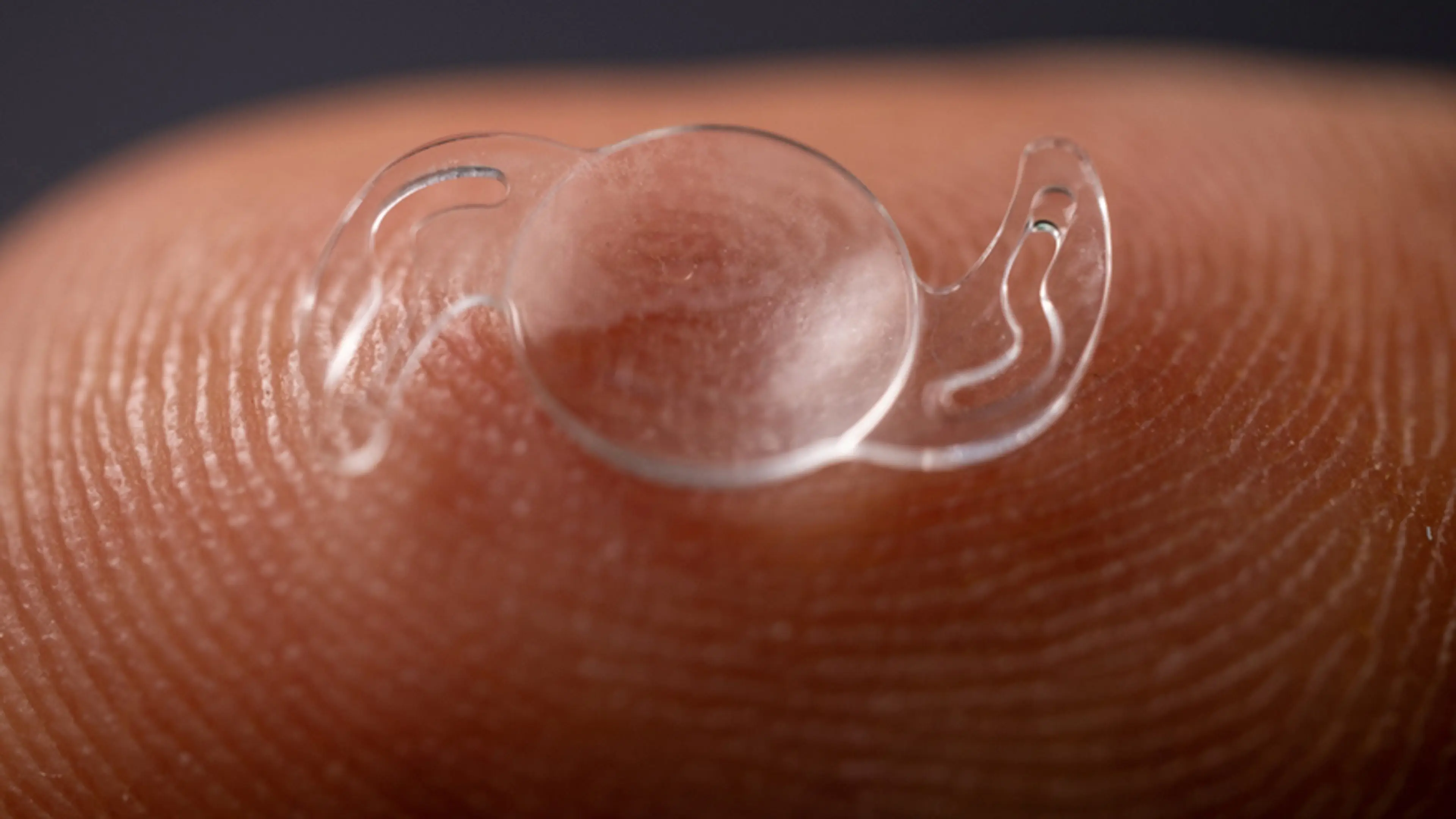
Many patients assume there is only one standard artificial lens, but the reality is very different. Today, a variety of IOLs exist, each designed with specific strengths.
One important insight we share with patients is that IOL selection is not just a medical decision; it is a life decision. Because the lens will remain in the eye permanently, the choice determines the quality of vision for decades to come. In Korea, where people often stay active in both professional and personal life well into their later years, many opt for multifocal or premium lenses. They want the convenience of living with minimal dependence on glasses, and the technology today makes that possible.
Preparation for cataract surgery with IOL implantation is far less complicated than most people expect.
You may be advised to stop wearing contact lenses for several days before your preoperative measurements. This allows the cornea to return to its natural shape, ensuring the accuracy of the measurements. In some cases, antibiotic or anti-inflammatory drops will be prescribed to begin a few days before surgery to reduce infection risk.
Logistical preparation is also simple. Because your vision will be blurry for a short period after surgery, arranging for a friend or family member to accompany you is recommended. Beyond that, there is very little to do. Many patients are pleasantly surprised at how straightforward the preparation phase is compared to other types of surgery.
The day of surgery often feels like the most intimidating stage, but the reality is much more comfortable than most expect. Cataract surgery with IOL implantation is one of the most frequently performed surgeries worldwide, with an outstanding record of safety.
Upon arrival, you will be prepared with numbing eye drops. Unlike older methods, general anesthesia or painful injections are rarely needed. You remain awake but completely relaxed throughout the procedure.
The surgery itself is elegant in its simplicity:
A microscopic incision of about 2–3 millimeters is made at the edge of the cornea.
The clouded natural lens is carefully broken into fine fragments using ultrasound technology and then removed.
The new intraocular lens is inserted through the incision. Once inside, it unfolds naturally into its permanent position.
The entire process usually takes less than 20 minutes. Many patients walk out astonished at how fast and painless it was. One patient once told us, “I was more nervous sitting in the waiting room than I was during the surgery itself.” That sentiment is common.
Recovery begins right away. After surgery, you will rest briefly at the clinic while your initial vision stabilizes. Most patients go home the same day.
Vision often improves almost immediately, but it is normal for things to appear hazy for the first few days. Colors may seem brighter, and light sensitivity may increase temporarily. These are signs that your eye is adjusting to its new lens.
You will be instructed to wear a protective shield while sleeping to avoid accidentally rubbing the eye, and prescribed eye drops will be used regularly to reduce inflammation and prevent infection.
Unlike many other surgeries, patients are usually able to resume light daily activities within 24 hours. Reading, walking, and watching television are safe. Strenuous exercise, swimming, or dusty environments should be avoided for the first week.
Follow-up appointments are a crucial part of the process. The first follow-up typically occurs within one or two days of surgery to ensure the eye is healing as expected. Additional visits are scheduled at one week, one month, and sometimes three months depending on the case.
These visits allow the surgeon to confirm that the lens remains in proper position and that healing is progressing without complication. Because cataract surgery is so effective, patients sometimes underestimate the importance of these check-ups. At our clinic, we emphasize that careful monitoring ensures not just a good outcome, but the best possible outcome.
While many patients experience a dramatic improvement immediately, the full adjustment period can take weeks. This is especially true for those who choose multifocal or premium lenses. The eyes adapt quickly, but the brain also needs time to learn how to interpret the new visual signals.
For patients with monofocal IOLs, the result is usually crisp distance vision with glasses needed for reading or near tasks. For patients with multifocal lenses, some halos or glare at night may appear initially, but these typically diminish as the brain adapts.
The most rewarding part is rediscovering the details of daily life. Patients often remark that colors appear more vivid, whites look brighter, and fine print is once again readable. For many, it feels like turning back the clock.
Living with cataracts is like peering through a window that has slowly fogged over the years. You can still function, but the details and brilliance of life are muted. With IOL implants, that fog lifts. Suddenly, faces, landscapes, and colors return in sharp focus.
The process — from consultation to full adjustment — is smoother and faster than most people expect. With minimal downtime, high safety, and long-lasting results, cataract surgery with IOL implantation is one of the most reliable ways to restore not only vision but also independence and quality of life.
For patients considering cataract surgery, the first step is a professional consultation. At Gangnam Joeunnun Vision Clinic, we guide you through every decision, ensuring the lens chosen is the right one for your eyes and your lifestyle.