Home / Articles
What to Expect Before, During, and After Your IOL Implant Surgery
Home / Articles
What to Expect Before, During, and After Your IOL Implant Surgery
If you’ve ever struggled to recognize someone’s face across the room, read small print in dim light, or drive at night with halos and glare clouding your vision — you’re not alone. These are often the first signs of a cataract, a clouding of the natural lens inside your eye. It happens gradually for most of us, typically after our 50s or 60s, but in Korea’s aging population — where people live longer and expect sharper, more functional vision — these symptoms feel more disruptive than ever.
Fortunately, modern Intraocular Lens (IOL) implant surgery offers not just a remedy, but a visual upgrade. Think of it like replacing a fogged-up camera lens with a new, precision-calibrated one — one that might even eliminate your need for glasses. At Gangnam Joeunnun Vision Clinic, located in the heart of Seoul’s medical hub in Gangnam, we specialize in this very transformation.
But as with any surgery, especially one involving something as delicate as your eyes, knowing what to expect makes a huge difference. That’s why we’ve prepared this in-depth guide — so you can walk into your IOL surgery with confidence, clarity, and peace of mind.
Your journey begins with a thorough preoperative consultation. At Gangnam Joeunnun Vision Clinic, we believe every patient deserves a bespoke approach. That’s why we use ZEISS high-definition diagnostics to scan your eye in detail — measuring everything from corneal curvature and lens opacity to retinal health and pupil dynamics.
Our eye exams go far beyond “Which is better, one or two?” We assess:
Axial length (the length of your eyeball)
Corneal astigmatism and shape
Macular health
Tear film quality
Intraocular pressure
Any underlying conditions like glaucoma, dry eye, or diabetic retinopathy
These data points are essential — not only for surgical planning, but for choosing the best IOL type for your life.
Most patients are surprised to learn how many options exist for artificial lenses today. The “default” monofocal lens is still available, but advanced options can significantly improve your range of vision:
To be honest, many clinics only offer basic lenses unless you ask. At Gangnam Joeunnun Vision Clinic, we walk you through your options based on how you live — whether you drive often, work on screens, or want to avoid glasses altogether.
Next, we’ll go over your general health status. You’ll be asked about:
Blood pressure
Blood sugar (diabetes can affect eye healing)
Medications (like blood thinners)
Allergies
On surgery day, you’ll arrive without makeup, contact lenses, or perfume (all of which can interfere with sterilization). After a final check of your eye measurements, you’ll be prepped for the procedure.
Most patients are surprised by how non-invasive the experience is. We use numbing eye drops, not injections or general anesthesia. You’ll be awake the whole time, but completely comfortable.
We gently clean your eye, place a drape over your face (with space to breathe easily), and use a small device to keep your eyelids open. You’ll see bright lights and maybe a few shadows, but you won’t feel pain.
Using phacoemulsification (a high-frequency ultrasound) or femtosecond laser, we create a tiny incision in your cornea — usually about 2.2 mm. The cloudy natural lens is broken up and removed through this micro-incision.
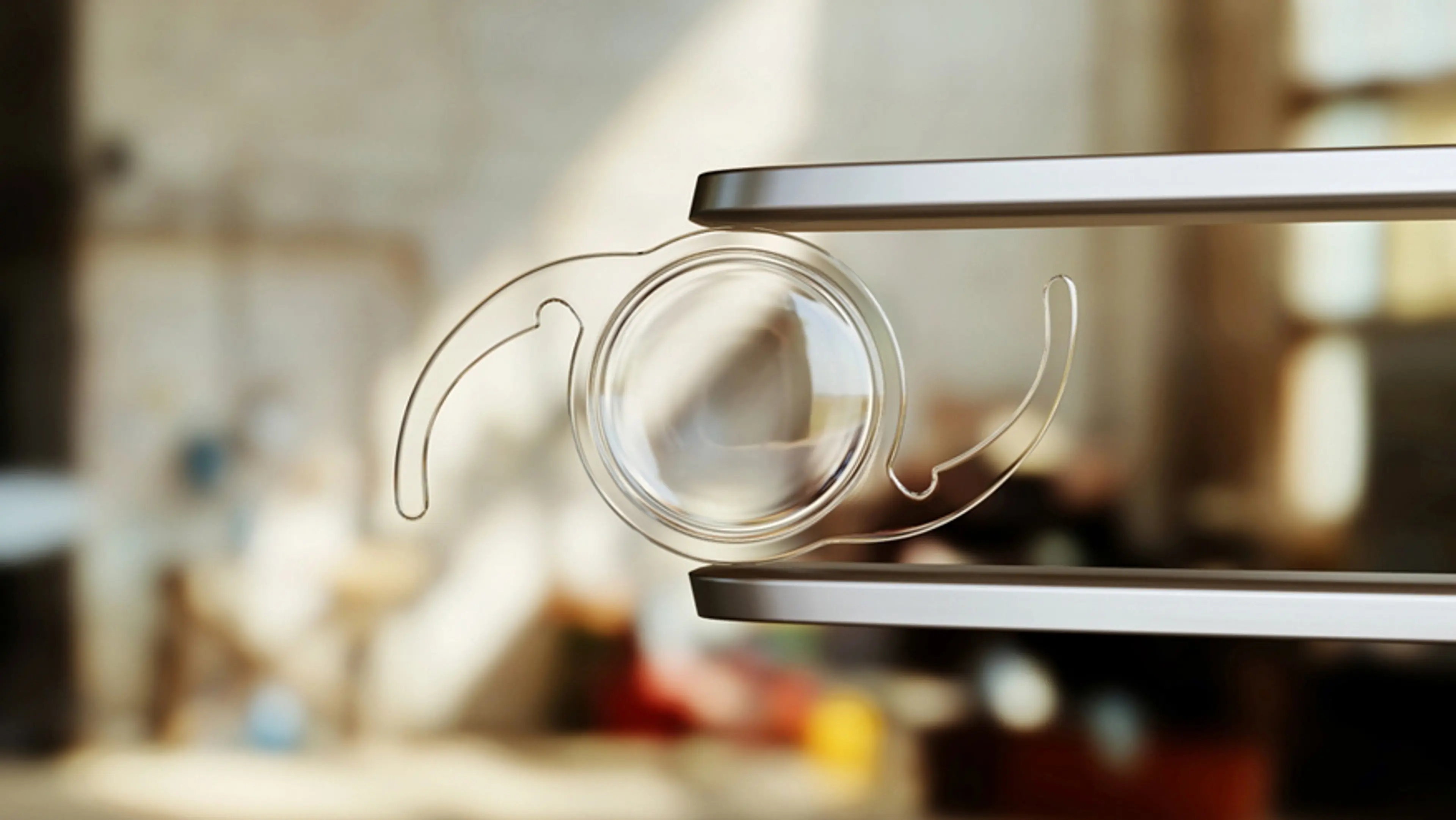
Then, your new IOL is inserted. This lens is folded inside a tiny injector, and once inside your eye, it unfolds perfectly into place. With ZEISS image-guided technology, we ensure precise alignment — especially important if you’re getting a toric lens for astigmatism.
The incision is self-sealing, so no stitches are required. Most surgeries take 10 to 15 minutes per eye.
After surgery, you’ll rest in our recovery area for a short time. Your vision may be slightly hazy or light-sensitive at first. A protective shield is placed over your eye, and you’ll go home the same day — accompanied by a family member or friend.
Most patients notice improved vision within the first day or two — clearer colors, sharper outlines, and less glare. You might feel a mild foreign body sensation or light dryness, but this passes quickly.
At Gangnam Joeunnun Vision Clinic, we provide personalized postoperative instructions and eye drop regimens, and your first follow-up is usually the next day.
Expect to use:
In the first few weeks:
Avoid strenuous exercise and bending over for long periods in the first few days to reduce pressure on the eye.
It’s important to know that your brain needs time to adjust to your new visual system. This is especially true if you choose multifocal or EDOF lenses. You may notice:
Mild halos or glare at night
Depth perception changes
Flickers or light sensitivity
These typically improve over several weeks as your brain adapts — a process called neuroadaptation.
Most patients achieve stable, satisfying vision within 1 month, with continued fine-tuning over the next 2–3 months.
Here’s something we’ve learned from years of experience — not everyone needs the most expensive lens. What matters is matching the right lens to the right lifestyle. Some patients want to read without glasses, while others care more about crisp distance vision for driving.
Also: Your second eye may need surgery within a few weeks if both eyes have cataracts. At Gangnam Joeunnun Vision Clinic, we often perform bilateral surgeries safely and efficiently, especially for patients visiting from abroad or with busy schedules.
And while the surgery is fast and comfortable, the real magic happens in the planning and follow-up. Precision matters — in your biometric scan, in your IOL selection, in your postoperative care.
We’re proud to say that Dr. Kim Jun-heon, our founder and lead surgeon, has performed thousands of successful IOL implant procedures with ZEISS-guided technology, earning the trust of both local and international patients.
Here’s what sets us apart:
Over 16 years of refractive and cataract surgery experience
One of the few clinics in Seoul to specialize in personalized IOL implantation
Access to premium ZEISS optics for lens design and surgical planning
Multilingual staff and international patient care coordination
Transparent consultation — no pressure, just answers
Vision is not just about reading an eye chart. It’s about the joy of recognizing your loved ones’ faces, seeing street signs clearly when driving, or appreciating the vibrant colors of autumn leaves in Seoul.
If your vision has become cloudy, frustrating, or limiting — you don’t have to live with it. IOL implant surgery is one of the safest, most life-enhancing procedures available today. And when performed with the right tools and the right team, it can feel less like a medical necessity and more like a personal transformation.
At Gangnam Joeunnun Vision Clinic, we’re here to help you reclaim your vision with expertise, care, and technology you can trust.