Home / Articles
SMILE Eye Surgery for Thin Corneas | Safer LASIK Alternative
Home / Articles
SMILE Eye Surgery for Thin Corneas | Safer LASIK Alternative
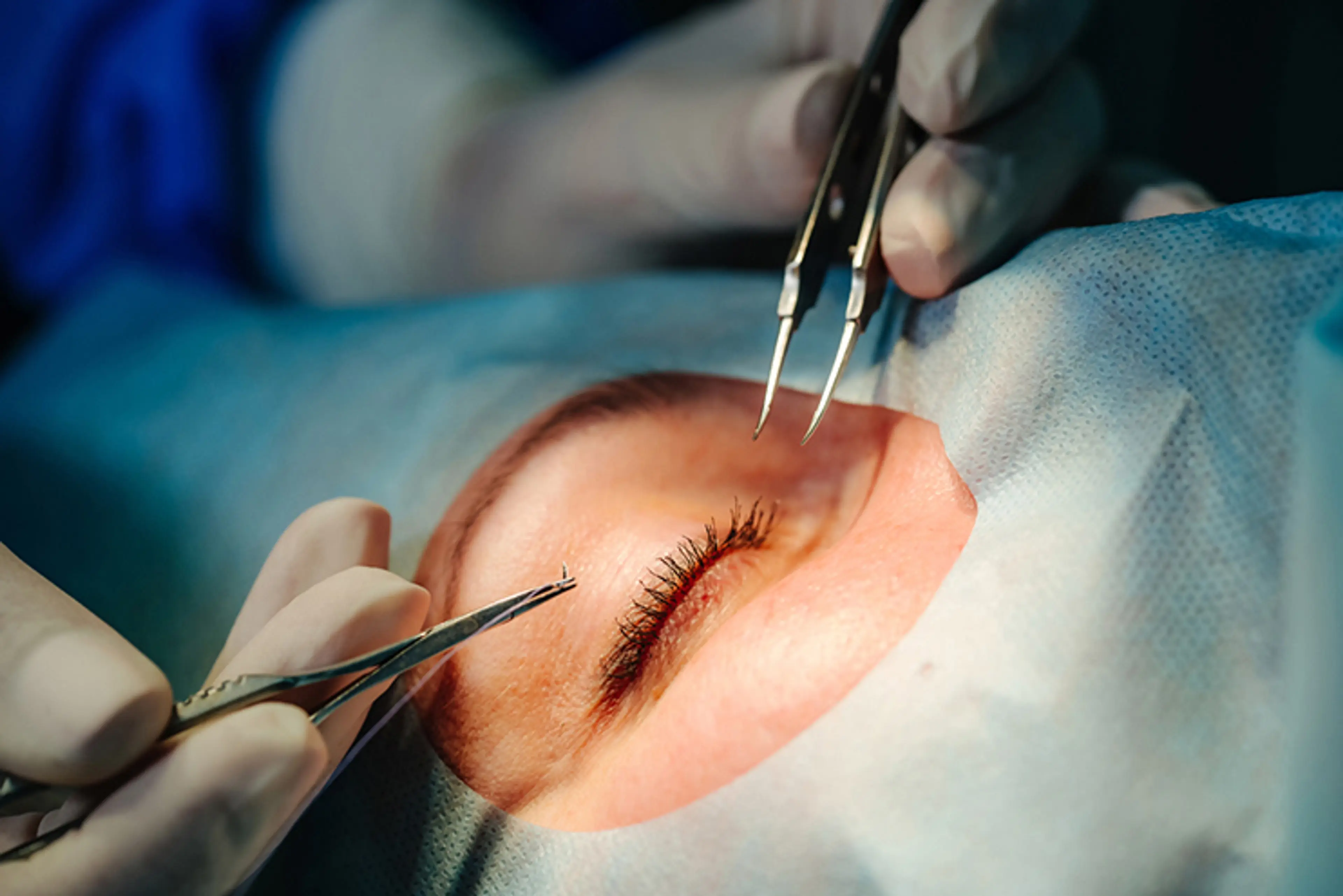
SMILE (Small Incision Lenticule Extraction) represents a modern leap in vision correction technology. Developed as a less invasive alternative to traditional LASIK, SMILE uses a femtosecond laser to create and remove a lenticule — a small piece of corneal tissue — through a micro-incision. This precise and tissue-conserving technique can correct common refractive errors like nearsightedness and astigmatism without the need for a large corneal flap.
Unlike LASIK, which involves cutting a flap in the cornea, SMILE maintains the integrity of the corneal structure. This makes it particularly appealing for individuals with thinner corneas or those concerned about the structural impact of surgery. SMILE is performed using advanced equipment like the ZEISS VisuMax femtosecond laser, which ensures the highest level of accuracy and patient comfort.
The rise in popularity of SMILE is no coincidence. Patients are increasingly choosing this option due to its minimal invasiveness, lower risk of dry eye, and quicker recovery. Post-operative comfort is one of the key benefits of SMILE. Since it doesn’t create a flap, there’s less nerve disruption, which significantly reduces the chances of developing dry eye symptoms — a common side effect of LASIK.
The streamlined nature of the SMILE procedure also means fewer moving parts, which reduces the chance of mechanical complications during surgery. Moreover, because the corneal surface is left largely untouched, many patients report a more comfortable healing experience. In clinical settings, most people return to their daily routines within a day or two, often with minimal discomfort.
Corneal thickness plays a critical role in determining a patient’s suitability for laser vision correction. The cornea needs to retain a certain amount of tissue after the procedure to maintain its structural integrity. When too much tissue is removed, especially from a cornea that’s already thin, it can lead to serious complications such as corneal ectasia — a progressive thinning and bulging of the cornea that impairs vision and may require a corneal transplant.
Pre-surgical screening involves tests like pachymetry, which measures corneal thickness, and corneal topography, which maps the surface curvature of the eye. A healthy cornea generally measures around 500 to 550 microns. If the cornea is below this range, LASIK may not be safe. This is where SMILE becomes a viable and often preferable alternative.
For individuals with corneas thinner than average, SMILE offers a lifeline. By preserving more tissue and avoiding flap creation, SMILE reduces the structural burden on the eye. This is particularly beneficial for patients who might otherwise be deemed ineligible for vision correction through traditional methods.
Dr. Kim Jun-heon, a renowned ophthalmologist at Gangnam Joeunnun Vision Clinic, explains, “We see many patients who have been turned away from LASIK due to thin corneas. In these cases, SMILE provides not only a feasible solution but often a superior one in terms of both safety and outcomes.”
Because the incision in SMILE is significantly smaller — just 2–4 mm compared to the 20 mm flap in LASIK — the overall biomechanical stability of the cornea is better preserved. This translates to fewer complications and greater long-term satisfaction.
Real-world outcomes back up the clinical promise of SMILE. Patients consistently report quick visual recovery, minimal discomfort, and high satisfaction. In a survey conducted by Gangnam Joeunnun Vision Clinic, over 92% of SMILE patients with thin corneas achieved 20/20 vision or better within a week of surgery.
Take the story of Jun-Ho, a 31-year-old graphic designer from Seoul. Diagnosed with myopia and borderline thin corneas, he was not a candidate for LASIK. “I had always worn glasses and thought that surgery wasn’t for me,” he shares. “Dr. Kim reviewed my scans and said SMILE was an option. The procedure was quick, and I could see clearly the next morning. I never imagined such a change was possible.”
SMILE surgery works by targeting the inner corneal layers without disturbing the outer layers. The femtosecond laser creates a disc-shaped lenticule, which is then extracted through a keyhole incision. The procedure reshapes the cornea to correct the refractive error without the need for a flap. This approach results in a more stable cornea post-surgery and minimizes surface nerve damage, which is often responsible for post-operative dryness.
Extensive peer-reviewed research supports SMILE’s efficacy and safety. Studies published in journals such as the Journal of Cataract and Refractive Surgery have consistently found SMILE to provide comparable or superior results to LASIK, especially in cases involving thin corneas. Furthermore, long-term follow-ups indicate lasting vision improvement and a low incidence of side effects.
What sets Gangnam Joeunnun Vision Clinic apart is its commitment to precision and patient safety. With over 16 years of specialized experience in refractive surgery, the clinic is a top destination for both local and international patients. The team, led by Dr. Kim Jun-heon, uses advanced diagnostics like wavefront analysis and corneal biomechanics testing to ensure a custom-fit treatment plan for each patient.
Dr. Kim's meticulous approach involves reviewing every aspect of the patient's ocular profile. “Our goal is not just to improve vision but to ensure that we’re doing so in the safest and most sustainable way possible,” he emphasizes. The clinic uses premium technology platforms like VisuMax and LENSAR, which allow for ultra-precise lenticule creation and seamless extraction.
Though SMILE is ideal for many patients, it may not be suitable for all cases. Alternatives like Implantable Collamer Lenses (ICL) are often recommended for individuals with very thin or irregular corneas. Unlike laser surgeries, ICL does not remove any tissue. Instead, a biocompatible lens is inserted into the eye to correct vision, and it can be removed or replaced if necessary.
Refractive Lens Exchange (RLE) is another option, especially for patients over 40. This procedure involves replacing the eye’s natural lens with an artificial one to correct refractive errors and eliminate the risk of future cataracts. RLE is a more invasive procedure but offers excellent outcomes for patients with complex refractive needs.
After SMILE surgery, patients typically experience mild symptoms like dryness or a gritty sensation in the eyes. These side effects usually resolve within a few days. It’s important to follow the ophthalmologist’s instructions carefully, including using prescribed eye drops and avoiding strenuous activity or swimming for the first week.
Follow-up appointments are critical. During these visits, the eye’s healing progress is monitored, and visual acuity is reassessed. According to Dr. Kim, “These check-ups allow us to fine-tune care and catch any early signs of complications — although such cases are rare.”
Patients are also advised to protect their eyes from excessive sunlight and avoid rubbing them during the healing process. Sunglasses, lubricating eye drops, and proper rest can significantly enhance the recovery experience.
Improving vision is about more than just removing glasses — it’s about improving quality of life. Many patients report enhanced self-confidence, better performance in work and sports, and greater independence after SMILE surgery. For individuals who have struggled with glasses since childhood, the impact can be life-changing.
There’s also a psychological boost in knowing that the chosen procedure is safe. For patients with thin corneas, the anxiety of potential surgical risks can be a major deterrent. By choosing SMILE at a trusted facility like Gangnam Joeunnun Vision Clinic, that anxiety is replaced with assurance and optimism.
South Korea is at the forefront of ophthalmic innovation, and clinics like Gangnam Joeunnun are leading the way. With a strong emphasis on patient-centered care, transparent pricing, and high-tech facilities, Korea has become a top destination for medical tourism — particularly for eye surgeries.
International patients are supported with multilingual staff, pre-travel consultations, and comprehensive post-operative care. This makes the entire experience seamless and stress-free, from the first consultation to the final check-up.
As technology continues to advance, SMILE is expected to evolve even further. New iterations of the procedure may one day address a broader range of refractive errors, including hyperopia and presbyopia. For now, it remains one of the safest and most effective choices for those with thin corneas.
Ongoing research and innovation in the field promise even better outcomes and expanded indications. With leaders like Dr. Kim contributing to global clinical studies, Gangnam Joeunnun Vision Clinic is well-positioned to remain at the cutting edge of refractive eye care.
If you’ve been told you have thin corneas and are not a candidate for LASIK, SMILE may be the solution you’ve been waiting for. With its minimally invasive technique, strong safety profile, and high patient satisfaction, SMILE is transforming the landscape of vision correction.
To learn more or schedule a consultation, contact Gangnam Joeunnun Vision Clinic. Discover how SMILE can help you achieve the clear, stable vision you deserve — safely, effectively, and with confidence.