Home / Articles
Smile Eye Surgery for Older Adults: Is It Safe?
Home / Articles
Smile Eye Surgery for Older Adults: Is It Safe?
There is a moment most people remember clearly: the first time they have to hold a book or a smartphone farther away in order to read the text. For many, this happens in their early to mid-40s, and it marks the beginning of presbyopia—the age-related decline in the eye’s ability to focus up close. For those who have been nearsighted since youth, this moment often feels like the final straw. After decades of relying on glasses or contact lenses, now they must juggle reading glasses on top of everything else.
In modern eye care, however, there are more solutions than ever before. Over the last decade, SMILE (Small Incision Lenticule Extraction) has emerged as a leading vision correction surgery. Its reputation for faster recovery, minimal dry-eye side effects, and flap-free technique has made it especially appealing.
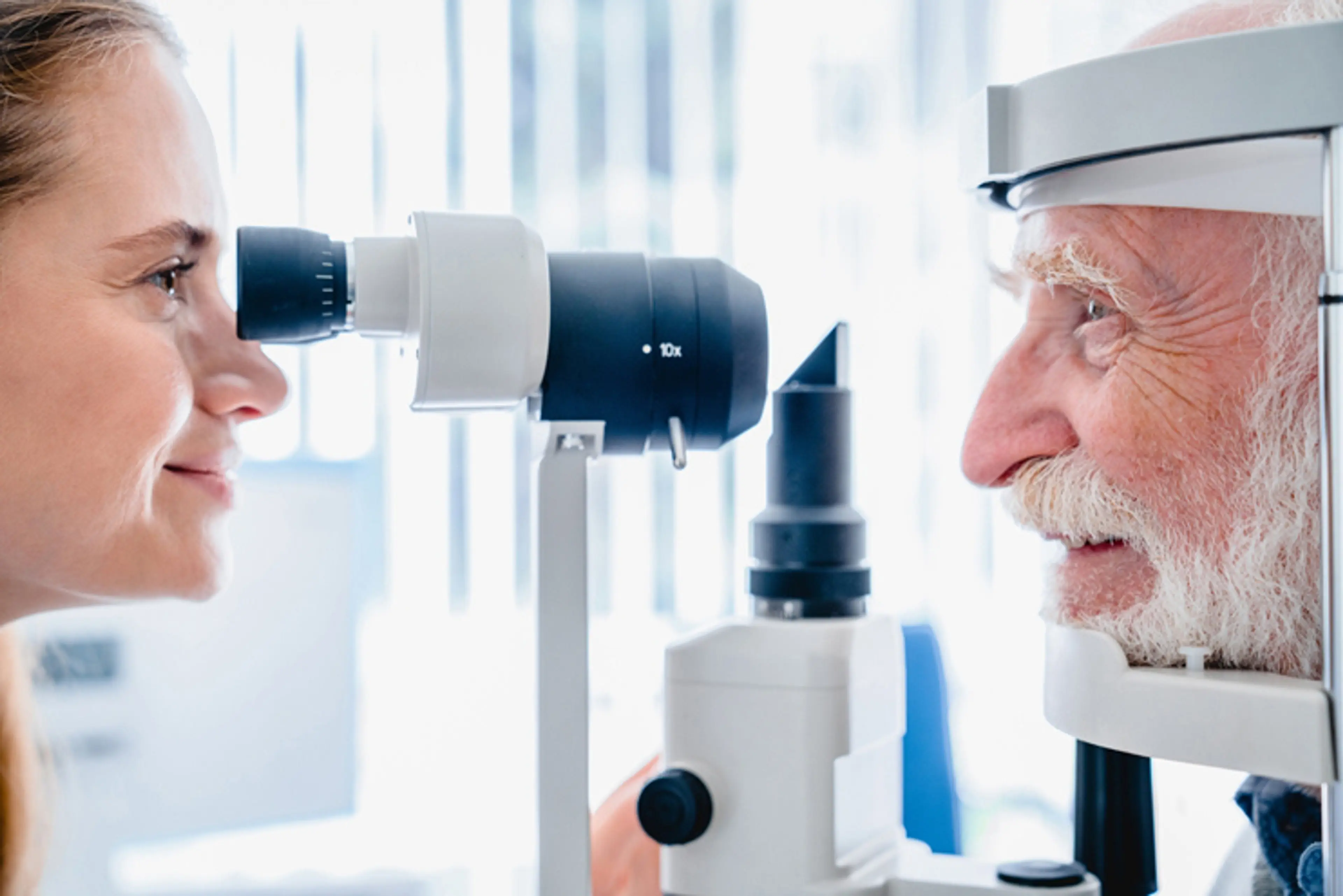
But if you are in your late 40s, 50s, or even 60s, you may be asking: Is SMILE still safe for me? The short answer is yes—if your eyes meet certain health criteria. Age alone is not a disqualifier, but the condition of your cornea, lens, and tear film is what ultimately determines candidacy. At Gangnam Joeunnun Vision Clinic in Seoul, this is a question we address daily.
In this article, we will explain how SMILE works, what older adults should consider, the role of presbyopia and cataract, and how our clinic evaluates patients who are beyond the typical “young adult” range. By the end, you will have a clearer understanding of whether SMILE is a safe and practical option for you—or whether another approach may serve you better.
SMILE is a minimally invasive refractive surgery that corrects myopia (nearsightedness) and myopic astigmatism by reshaping the cornea. Using a femtosecond laser, the surgeon creates a small, lens-shaped piece of corneal tissue called a lenticule inside the cornea. This lenticule is then removed through a micro-incision of just 2–3 millimeters.
Unlike LASIK, which requires creating a flap across the corneal surface, SMILE leaves the upper layers of the cornea more intact. This difference matters because corneal nerves—essential for tear production and corneal sensation—are preserved to a greater degree. The result is often fewer early postoperative dry-eye symptoms compared to LASIK.
For younger adults, SMILE’s advantages are clear: fast recovery, comfort, and long-term visual stability. For older adults, these benefits remain—but additional considerations come into play, such as the natural aging of the lens and the onset of presbyopia.
A common misconception is that after a certain age—say 40 or 50—patients are “too old” for SMILE or any corneal laser surgery. In reality, there is no strict upper age limit. The decision depends on the health of the eye, not the number on a birthday cake.
Here are the main factors we evaluate in older patients:
When these elements are favorable, SMILE can be performed safely even in patients well into their 50s or 60s.
By the mid-40s, most people require reading glasses. SMILE corrects distance vision but does not restore the natural focusing power of the lens. This means that after SMILE, patients will still need glasses for near work unless a monovision strategy is used—where one eye is corrected for distance and the other slightly under-corrected for near.
At our clinic, we test monovision tolerance with contact lenses before making it permanent with surgery. Not everyone adapts comfortably, but those who do can enjoy functional vision at multiple distances without constantly switching between glasses.
Cataracts typically begin forming in the late 40s and 50s, although patients may not notice symptoms for several years. If cataracts are already present, SMILE will not address the root issue. In these cases, a lens-based procedure provides a more lasting solution. Importantly, having SMILE before developing significant cataract may limit later options, since refractive accuracy in cataract surgery can be affected by previous corneal surgery.
Dry eye is one of the most common age-related ocular complaints. Because SMILE preserves more corneal nerves than LASIK, it generally causes less postoperative dryness. This makes it particularly attractive for older patients, provided the tear film is stable enough to begin with.
Multiple studies have confirmed that SMILE is both safe and effective for myopia correction. The procedure has received international regulatory approvals and has been performed in millions of eyes worldwide.
For older patients, safety hinges on careful screening. The primary risks include:
At Gangnam Joeunnun Vision Clinic, our protocol involves detailed imaging and analysis to minimize these risks. With proper case selection, SMILE’s safety in older adults is comparable to that in younger patients.
When older patients visit us for a consultation, we emphasize a comprehensive evaluation that covers not only eye anatomy but also lifestyle. The process includes:
This meticulous approach ensures that the chosen surgery not only works well now but also aligns with the patient’s long-term visual needs.
Recovery after SMILE is typically fast, regardless of age. Most patients resume daily activities within a day or two, and vision continues to sharpen over several weeks. For older patients, the main considerations after surgery are:
In other words, SMILE can provide years of clear, comfortable distance vision, but it does not halt the normal aging process of the eye.
There are two guiding principles we share openly with our patients, and also with our own relatives when they ask about surgery:
These principles reflect our philosophy of prioritizing long-term safety and clarity over quick fixes.
So, is SMILE safe for older adults? The answer is yes—when performed on the right eyes. Age alone does not determine candidacy. What matters is the health of your cornea, the clarity of your natural lens, and your overall eye condition.
For patients in their 40s and 50s with healthy corneas and clear lenses, SMILE can deliver excellent distance vision with minimal downtime and fewer issues with dryness. For those with early cataracts or presbyopia concerns, lens-based procedures may be the wiser choice.
At Gangnam Joeunnun Vision Clinic, our approach is grounded in precision, patient-centered care, and technological excellence. Led by Dr. Kim Jun-heon, we have built our reputation on thorough evaluations and transparent guidance. Every recommendation—whether SMILE, LASIK, LASEK, or cataract surgery—is tailored to the individual, not the age group.