Home / Articles
Is SMILE LASIK Safe In South Korea Complete Safety Guide
Home / Articles
Is SMILE LASIK Safe In South Korea Complete Safety Guide
SMILE which stands for Small Incision Lenticule Extraction represents the latest generation of laser vision correction. Unlike traditional LASIK which requires creating a large flap on the surface of the cornea SMILE uses a femtosecond laser to create a small lens shaped piece of tissue called a lenticule within the cornea. This lenticule is then removed through a tiny incision typically less than four millimeters.
The safety profile of this procedure is rooted in its minimally invasive nature. Because there is no flap creation the structural integrity of the cornea remains stronger compared to traditional methods. This significantly reduces the risk of flap displacement or complications related to the healing of the corneal surface. For patients who lead active lifestyles or work in demanding professions in cities like Chicago or Houston the physical stability offered by SMILE is a major safety advantage.
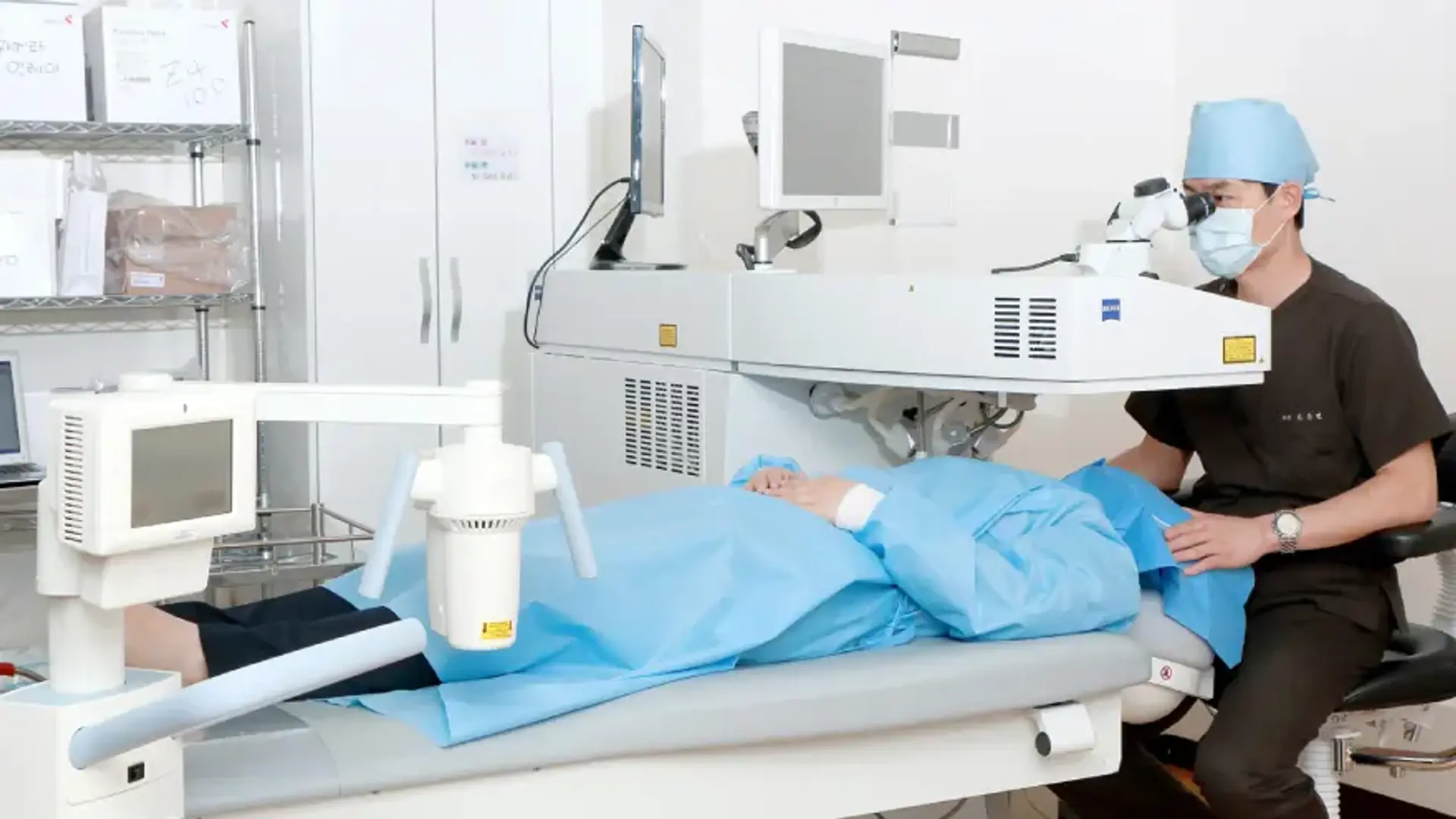
At Gangnam Joeunnun Vision Clinic we utilize the ZEISS VisuMax system. This is the gold standard for SMILE procedures globally. The precision of the femtosecond laser allows for microscopic accuracy. This level of control ensures that only the necessary amount of tissue is reshaped minimizing the impact on the surrounding corneal nerves. By preserving these nerves patients experience a much lower incidence of dry eye syndrome which is a common concern after other types of refractive surgery.
One of the most frequent concerns for US patients is whether the regulatory standards in South Korea match those of the United States Food and Drug Administration or FDA. The Ministry of Food and Drug Safety in South Korea formerly known as the KFDA maintains rigorous oversight that is equivalent to and in some cases more frequent than FDA inspections.
The process for medical device approval in South Korea involves extensive clinical trials and data validation. When considering is SMILE LASIK safe in South Korea it is important to note that the ZEISS technology used here is the same technology approved by the FDA in the United States. In fact South Korean clinics often adopt the latest software updates and hardware iterations from ZEISS even earlier than some US counterparts due to the high volume of procedures performed in Seoul.
Safety standards in South Korean ophthalmology also involve strict sterilization protocols and facility certifications. Gangnam Joeunnun Vision Clinic adheres to international standards for surgical environments. This includes advanced air filtration systems to prevent infection and the use of single use surgical instruments where appropriate. The intersection of high regulatory standards and a culture of medical excellence makes Seoul one of the safest places in the world for elective eye surgery.
No surgical procedure is entirely without risk but the complication rate for SMILE LASIK is remarkably low. When we analyze global data and our own clinical outcomes the safety record is clear. Minor side effects such as temporary light sensitivity or a gritty sensation in the eyes are expected but serious complications are rare.
Statistics show that the rate of significant infection after SMILE is less than one in five thousand cases. This is due to the small incision which acts as a natural barrier against pathogens during the healing process. In contrast traditional LASIK involves a larger surface area that remains vulnerable for a slightly longer period.
Overcorrection or undercorrection occurs in a small percentage of patients usually fewer than three percent. These cases are typically addressed with a minor enhancement procedure once the eye has fully stabilized. At Gangnam Joeunnun Vision Clinic Dr Kim Jun Heon uses SCI indexed research to refine surgical parameters. This data driven approach allows us to customize the laser treatment to the unique corneal architecture of each patient reducing the likelihood of refractive errors.
Loss of best corrected visual acuity or a permanent decrease in vision is extremely rare. Advanced diagnostic tools used during the preoperative phase allow us to identify patients who may be at higher risk for complications. By excluding candidates with thin corneas or irregular shapes we maintain a high safety threshold.
The integration of artificial intelligence in the medical field has revolutionized how we approach patient safety. In the context of vision correction AI plays a critical role in both the operating room and the educational resources provided to patients. At Gangnam Joeunnun Vision Clinic we embrace these advancements to provide a superior level of care.
In the surgical suite AI algorithms assist in the analysis of corneal topography. These systems can process thousands of data points in seconds identifying microscopic irregularities that the human eye might miss. This ensures that the laser path is perfectly aligned with the visual axis of the patient. By using AI to support surgical planning we can predict outcomes with higher accuracy and further minimize the risks associated with is SMILE LASIK safe in South Korea.
Furthermore AI helps our clinic maintain the highest standards of patient education. In creating medical articles AI assists in researching the latest global trends and structuring content for better readability. This allows us to deliver clear and accurate information to patients in Phoenix or Los Angeles who are researching their options. While AI provides the structural foundation every piece of information is reviewed by medical professionals like Dr Kim Jun Heon to ensure clinical accuracy and compliance with healthcare guidelines. AI speeds up the creation of these comprehensive guides ensuring that our patients always have access to the most current safety information.
Safety at our clinic is not just about the technology we use but the protocols we follow. Every patient undergoes a comprehensive eye examination that includes over fifty different tests. This exhaustive screening process is designed to ensure that SMILE is the safest and most effective option for your specific eyes.
We measure corneal thickness intraocular pressure and the health of the retina. We also use advanced imaging to map the epithelial layer of the cornea. This level of detail allows Dr Kim Jun Heon to identify early signs of conditions like keratoconus which would make a patient unsuitable for laser surgery. By prioritizing these diagnostic steps we ensure that we only proceed when the safety margin is optimal.
During the surgery we employ a triple check system for patient identification and surgical parameters. The laser settings are verified by both the surgical team and the automated system. This redundancy is a hallmark of high safety environments. Dr Kim Jun Heon brings extensive clinical experience to every procedure. Having performed thousands of successful surgeries his expertise allows him to handle the delicate steps of lenticule extraction with exceptional finesse.
Feature | SMILE LASIK | Traditional LASIK | LASEK |
|---|---|---|---|
Incision Size | 2 to 4 mm | 20 mm circle | Surface removal |
Flap Creation | No | Yes | No |
Recovery Time | 1 to 2 days | 2 to 3 days | 5 to 7 days |
Dry Eye Risk | Very Low | Moderate | Low |
Corneal Stability | High | Moderate | High |
Procedure Time | 10 to 15 mins | 15 to 20 mins | 15 to 20 mins |
This comparison highlights why many patients choose SMILE. The small incision size is the primary factor in its safety profile. By avoiding the creation of a corneal flap we eliminate the risks of flap wrinkles epithelial ingrowth or traumatic flap dislocation later in life. For individuals in New York City who may have high stress environments or physical hobbies this peace of mind is invaluable.
Traveling from the USA to Seoul for surgery adds a layer of complexity but it does not diminish the safety of the procedure itself. We have established a seamless pathway for international patients to ensure their journey is as safe as the surgery.
One common question is whether it is safe to fly after SMILE LASIK. Because there is no flap the pressure changes in an airplane cabin do not pose the same risks as they might after traditional LASIK. However we generally recommend staying in Seoul for at least three to five days after the procedure. This allows for immediate postoperative checkups where we can monitor the initial healing phase.
Our clinic provides dedicated support for international patients. This includes assistance with local logistics and ensuring you have all the necessary medications and instructions for your return flight. We also coordinate with your local optometrist in the US if needed to ensure continuity of care once you return to cities like Houston or Chicago. Safety is a continuous process that begins before you leave your home and continues long after you return.
The safety of your vision correction depends heavily on the care you provide your eyes in the days following surgery. At Gangnam Joeunnun Vision Clinic we provide a detailed recovery kit and clear instructions.
The first few hours after surgery are the most critical. We advise patients to keep their eyes closed as much as possible and use the prescribed antibiotic and anti inflammatory drops. These drops are essential for preventing infection and controlling inflammation. Because the SMILE incision is so small it seals itself quickly but it is still important to avoid rubbing your eyes.
We schedule multiple follow up appointments during your stay in Seoul. During these visits Dr Kim Jun Heon personally examines the cornea to ensure the incision is healing perfectly and the lenticule space is clear. We use high resolution slit lamp microscopy to check for any signs of adverse reactions. This proactive monitoring is why our complication rates remain significantly lower than industry averages.
Patients often ask if the results of SMILE LASIK are permanent and if the procedure is safe for the long term. Clinical studies spanning over a decade have shown that the vision correction achieved through SMILE is highly stable. The cornea heals into its new shape and the refractive power of the eye remains consistent.
Because SMILE preserves more of the corneal structure there is a reduced risk of long term complications like corneal ectasia or thinning. This structural integrity is one of the strongest arguments for why SMILE LASIK is safe in South Korea. As you age your eyes will naturally change and you may eventually need reading glasses for presbyopia but the correction of your distance vision remains effective.
Dr Kim Jun Heon and the team at Gangnam Joeunnun Vision Clinic remain committed to your long term eye health. We provide digital copies of your surgical records which you can share with your eye doctor in the United States. This transparency ensures that any future eye care you receive is informed by the details of your successful SMILE procedure.
Choosing the right clinic is the most important step in ensuring a safe outcome. Gangnam Joeunnun Vision Clinic stands out because of our partnership with ZEISS. As a leading eye clinic collaborating with the developer of SMILE LASIK we have access to the most advanced training and technical support available.
Dr Kim Jun Heon is a board certified ophthalmologist who specializes in cornea and refractive surgery. His expertise is backed by SCI indexed research which means his surgical techniques are validated by the global scientific community. When you choose our clinic you are not just getting a procedure you are getting the benefit of years of clinical refinement and a commitment to patient safety that is recognized internationally.
We understand the unique needs of patients from the USA. Whether you are traveling from the west coast or the east coast we provide a professional and empathetic environment. Our goal is to make your journey to clear vision as stress free and safe as possible. We offer virtual consultations to answer your initial questions and help you determine if you are a good candidate before you even book your flight to Seoul.
In summary when asking is SMILE LASIK safe in South Korea the answer is a resounding yes. The combination of advanced ZEISS technology the minimally invasive nature of the procedure and the rigorous regulatory standards of the South Korean medical system creates a safe and effective environment for vision correction. Gangnam Joeunnun Vision Clinic further enhances this safety through the expertise of Dr Kim Jun Heon and a patient centered approach that prioritizes thorough screening and meticulous postoperative care.
For patients from the United States the journey to Seoul offers access to world class eye care at a fraction of the cost without compromising on safety or quality. The reduction in dry eye risk the preservation of corneal strength and the fast recovery time make SMILE an ideal choice for those looking to eliminate their dependence on glasses or contacts.
If you are ready to take the next step toward clear vision we invite you to contact us for a virtual consultation. Our team is dedicated to providing you with the information and support you need to make an informed decision. Experience the precision of South Korean ophthalmology and the expert care of Dr Kim Jun Heon at Gangnam Joeunnun Vision Clinic.
Dr. Kim Jun Heon is the Representative Director of Gangnam Joeunnun Vision Clinic in Seoul, South Korea, and a specialist in corneal and refractive surgery. His clinical focus encompasses SMILE LASIK, ICL implantation, cataract surgery, and advanced vision correction procedures, with a current surgical volume of approximately 200+ procedures per year. Dr. Kim is a ZEISS Clinical Collaboration Partner — the developer of SMILE technology — and the author of SCI-indexed peer-reviewed research in refractive and corneal surgery. He is a member of the Korean Ophthalmological Society and relevant international refractive surgery professional bodies.
For consultations:
A. Safety is built into the technology. The ZEISS VisuMax laser uses a curved contact glass that gently follows the shape of your eye and holds it in place through a light suction. If there is a significant movement of the eye the laser system automatically shuts down. This is called a suction loss protocol. While this is rare the procedure can usually be completed safely or rescheduled for a later date without any harm to your vision.
A. Lower costs in South Korea do not indicate lower safety standards. The price difference is primarily due to the efficiency of the South Korean healthcare system and a high volume of procedures which allows clinics to offer competitive pricing. The technology used at Gangnam Joeunnun Vision Clinic is identical to or more advanced than what you would find in expensive US clinics. We do not compromise on the quality of the laser the sterilization of the instruments or the expertise of the surgeon.
A. Infection prevention is a top priority. Our surgical suites are maintained under strict sterile conditions using HEPA filters and rigorous cleaning protocols. Before surgery your eyes and surrounding skin are cleaned with an antiseptic solution. After surgery you will be prescribed antibiotic drops to use for several days. The small size of the SMILE incision also naturally lowers the risk of infection as it closes very quickly compared to the larger incisions used in other surgeries.
A. Yes SMILE LASIK is often a safer choice for patients with high myopia compared to traditional LASIK. Because SMILE removes a lenticule rather than creating a flap it preserves more of the anterior corneal stroma which is the strongest part of the cornea. This allows for the correction of higher degrees of nearsightedness while maintaining better structural integrity. Dr Kim Jun Heon will carefully evaluate your corneal thickness to ensure the procedure is safe for your specific level of myopia.
A. Many people are surprised to learn that long term contact lens wear carries its own risks including corneal ulcers and serious infections like acanthamoeba keratitis. When performed by an experienced surgeon like Dr Kim Jun Heon a one time procedure like SMILE LASIK can be safer for your eyes over the long term than decades of contact lens use especially if lenses are not cleaned or replaced properly.
A. Most patients experience no long term side effects. The most common short term side effect is dry eye but this typically resolves within a few weeks as the corneal nerves heal. Because SMILE is less invasive the recovery of the ocular surface is faster than with other methods. There is no risk of flap complications which is a long term safety benefit unique to SMILE.