Home / Articles
How to Decide Between EDOF and Multifocal IOLs
Home / Articles
How to Decide Between EDOF and Multifocal IOLs
How to Decide Between EDOF and Multifocal IOLs: What Patients Really Need to Know Before Cataract Surgery
If you’ve been told you need cataract surgery — or you’re researching options for a loved one — you’re likely learning that choosing an intraocular lens (IOL) is one of the most important decisions in the process.
And today, it’s not just about restoring clear vision. It’s about how you want to see — and how you want to live — after surgery.
Two of the most popular premium lens options are EDOF (Extended Depth of Focus) and Multifocal IOLs. Both offer the possibility of reducing or even eliminating the need for glasses. Both have advanced dramatically in recent years. But they work in very different ways, and each comes with its own advantages — and trade-offs.
At Gangnam Joeunnun Vision Clinic in Seoul, we’ve helped thousands of patients through this choice. And here’s what we’ve learned: the best lens isn’t the most expensive one or the one with the most features. The best lens is the one that fits your eyes, your habits, and your lifestyle.
In this guide, we’ll walk you through the real-world differences between EDOF and multifocal IOLs — not just the specs on paper, but what you’ll actually experience after surgery. We’ll also share unique insights from our clinical team that rarely make it into online articles.
To begin with, let’s clear something up: not all intraocular lenses are created equal.
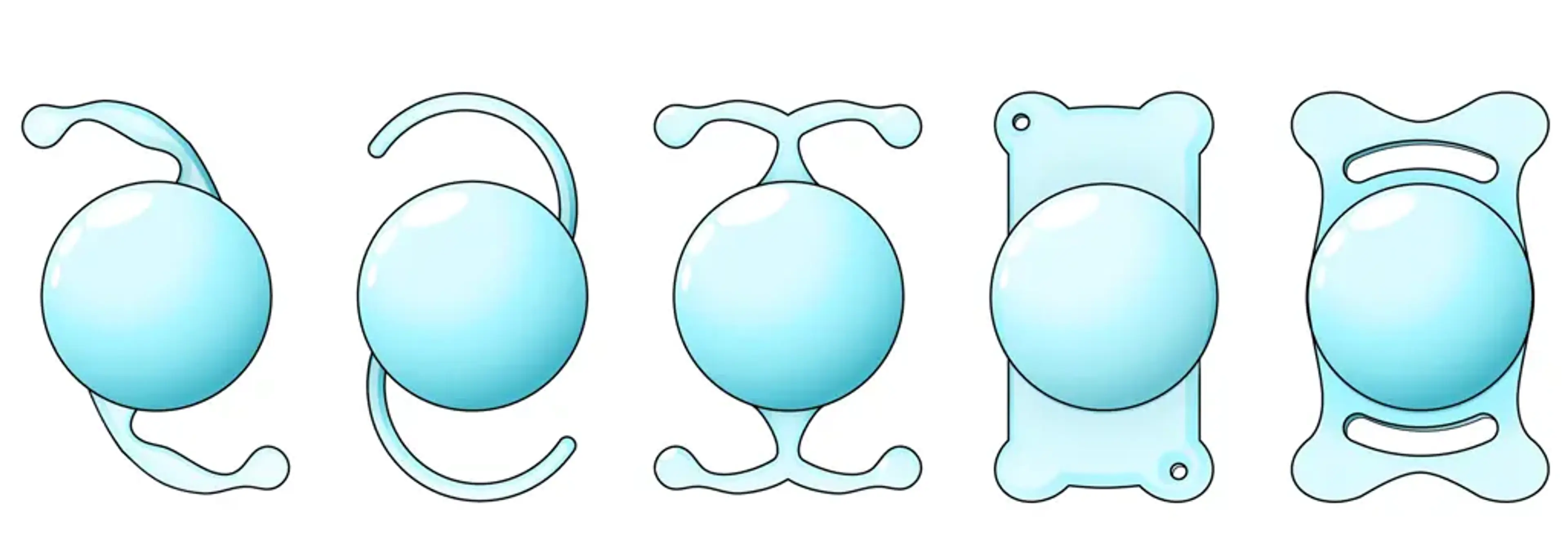
When cataracts are removed, they’re replaced with artificial lenses. In South Korea, the national health insurance covers standard monofocal lenses, which typically provide clear vision at one distance — usually far. But this means you’ll still need glasses for reading or using a smartphone.
Premium IOLs — including EDOF and multifocal types — go a step further. They aim to restore a greater range of vision, potentially eliminating the need for glasses altogether. While they involve an additional out-of-pocket cost, many patients find it a worthwhile investment in quality of life.
But what’s the difference between EDOF and multifocal lenses, and how do you choose?
Let’s break it down.
EDOF stands for Extended Depth of Focus.
Rather than splitting your vision into distinct zones (like multifocal lenses), EDOF lenses are designed to stretch your range of clear vision. Imagine turning the focus ring on a camera — instead of snapping from near to far, it smoothly transitions.
In simple terms, EDOF lenses provide:
Excellent distance vision
Very good intermediate vision (computer, dashboard, cooking)
Functional near vision (texting, menus — though some reading glasses may still be needed for fine print)
One of the most well-known examples is the TECNIS Symfony IOL, which uses special optics to extend depth of focus without sacrificing contrast.
Smooth, natural vision across most distances
Low incidence of halos and glare, especially at night
Good for people with active lifestyles or who drive often
You may still need reading glasses for small print or long reading sessions
Not ideal if your job or hobbies involve a lot of close-up work (e.g., sewing, calligraphy)
Multifocal lenses, by contrast, create distinct focal points within the lens. This allows the eye to switch between near, intermediate, and far vision — like having built-in bifocals or trifocals.
Some popular multifocal IOLs include AcrySof IQ PanOptix and Zeiss AT LISA tri. These lenses can deliver excellent near vision, especially for patients who want to read books or do close-up tasks without glasses.
Sharper near vision than EDOF lenses
Greater glasses independence for reading and mobile devices
Ideal for those who prioritize close-range vision in daily life
Higher risk of visual disturbances like halos, starbursts, or glare (especially at night)
Some patients need time to adjust due to neuroadaptation
Not always suitable for people with certain eye conditions (dry eye, corneal irregularities)
We’ve seen firsthand how differently people respond to each type of IOL — even when the lenses are “perfect” in a technical sense.
EDOF patients often describe their experience as “effortless.” One patient in his 60s told us:
“I can work on the computer, drive, and go hiking — all without glasses. I only reach for them when reading a book in bed at night.”
Multifocal patients, meanwhile, tend to celebrate the freedom from glasses but acknowledge a period of adjustment. A retired teacher shared:
“There were halos at first, especially at night. But after a few months, they didn’t bother me. I love being able to read my Bible and see clearly without glasses.”
This shows how individual needs and tolerances play a huge role in satisfaction.
Here’s a clinical insight you won’t often read on medical blogs:
You don’t necessarily have to choose just one type of IOL.
In many cases, we recommend a “blended” approach — for example:
EDOF lens in the dominant eye (for sharp distance/intermediate vision)
Multifocal lens in the non-dominant eye (for reading vision)
This technique, called “mix and match,” leverages the strengths of both lenses while minimizing their weaknesses.
Of course, not every patient is a candidate for this approach. It requires:
A healthy ocular surface
Good binocular vision
Thorough lifestyle evaluation
A highly experienced surgeon who can balance both lenses precisely
But when done properly, it can lead to superb functional vision — especially for patients with active, diverse visual needs.
Here are five practical questions we recommend patients consider during their consultation:
The success of any IOL — EDOF or multifocal — depends not just on the lens itself, but on how precisely it’s implanted.
At Gangnam Joeunnun Vision Clinic, we use the ZEISS IOLMaster 700, one of the most advanced biometric systems in the world. Combined with:
Corneal topography
Wavefront aberrometry
Tear film analysis
We create a fully personalized surgical plan that matches your visual system to the lens technology.
Moreover, Dr. Kim Jun-heon — our medical director and an experienced refractive and cataract surgeon — oversees all premium lens cases personally. His expertise in SMILE and laser-based surgeries gives him an edge in understanding corneal behavior and visual outcomes, even before the surgery begins.
So, Which Lens Is Right for You?
At the end of the day, deciding between an EDOF and a multifocal IOL isn’t just a medical decision — it’s a personal one.
It’s about how you want to experience the world after cataract surgery:
Or do you live a life that demands a little of everything — and might benefit from a customized mix of both lenses?
No single option is perfect for everyone. But with expert guidance, precise diagnostics, and a patient-first approach, the right solution can be found.
At Gangnam Joeunnun Vision Clinic, we combine the latest ZEISS technology with years of clinical insight to deliver cataract care that’s not only clear and safe — but tailored to you. We take the time to understand your goals, your lifestyle, and your concerns before recommending any surgical plan.