Home / Articles
How IOL Implants Help Restore Clear Vision After Cataract Surgery
Home / Articles
How IOL Implants Help Restore Clear Vision After Cataract Surgery
Cataracts can dramatically affect your ability to see clearly, making everyday tasks like reading, driving, or even enjoying a sunset feel increasingly challenging. The good news is that cataract surgery, one of the most successful and widely performed procedures in the world, offers a life-changing solution. At the heart of this surgery is the intraocular lens (IOL) implant — a small but powerful artificial lens that replaces the cloudy natural lens, restoring clear vision. But how exactly does this work, and why is it so effective in enhancing your eyesight after cataract surgery? In this article, we’ll explore how IOL implants help restore clarity to your vision, offering insights into the different types of lenses available and how they can be tailored to meet your unique needs. Whether you’re considering cataract surgery or are already in the recovery process, understanding the role of IOLs can help you make informed decisions about your eye health and vision care.
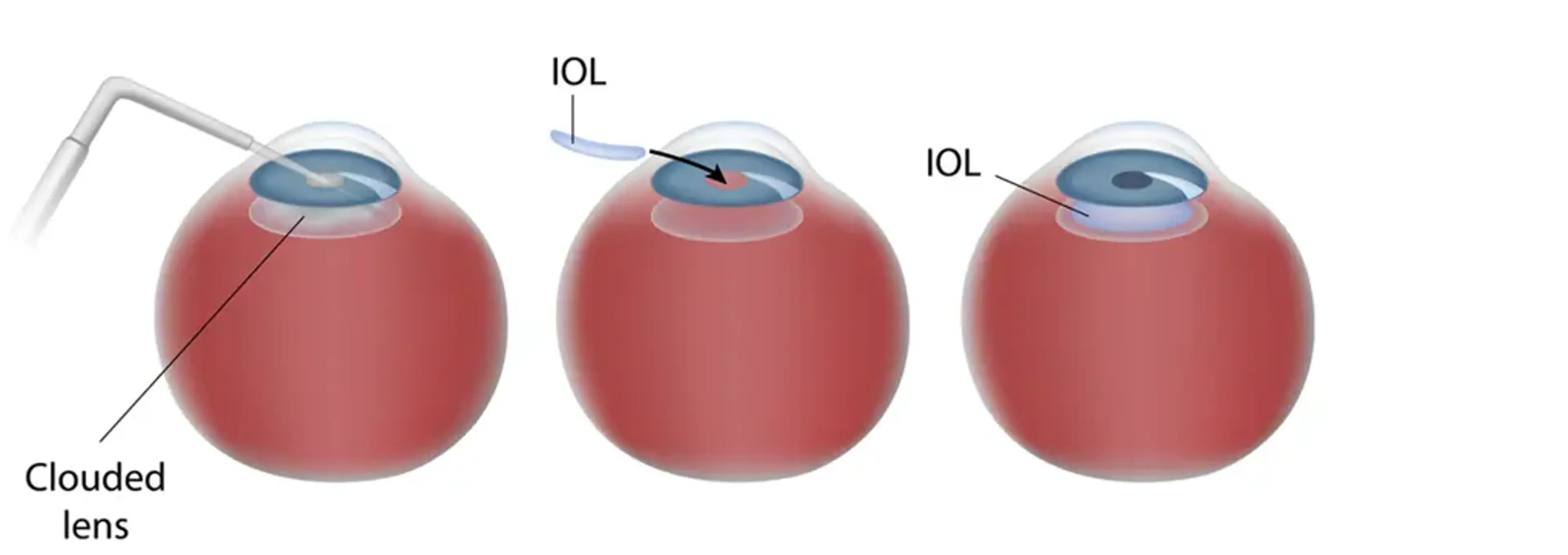
Intraocular lenses (IOLs) are artificial lenses that replace the natural lens of the eye during cataract surgery. Imagine the natural lens of the eye like the lens of a camera, focusing light and helping us see clearly. When a cataract develops, it clouds that lens, blurring the image that reaches the retina. Cataract surgery removes this cloudy lens and replaces it with an IOL, which works like a new lens, allowing light to reach the retina in a clear and focused way.
IOLs are designed to provide sharp, crisp vision once the cataract is removed. But not all IOLs are the same. Depending on the individual’s needs and lifestyle, different types of IOLs are available. These can include monofocal, multifocal, toric, and accommodative lenses, each designed to meet specific vision requirements.
When the cataractous lens is removed during surgery, it’s replaced with an IOL that is customized to help your eye focus properly. The new lens works by refocusing the light entering the eye, ensuring that it lands on the retina — the light-sensitive layer at the back of the eye — for clear vision.
Here’s how the process works:
While IOLs all aim to restore clear vision, they vary in design and functionality. Your ophthalmologist will recommend the type that best suits your lifestyle and vision needs.
The most common type of IOL is the monofocal lens, which provides clear vision at a single distance—usually for either near or distance vision. For people who don’t mind wearing glasses for tasks like reading, monofocal lenses are a straightforward solution. After surgery, many patients find they no longer need glasses for distance vision, but they may still need reading glasses.
Multifocal IOLs offer the convenience of providing clear vision at multiple distances—near, intermediate, and far. This means patients can potentially eliminate the need for reading glasses or distance glasses. These lenses can be especially helpful for individuals who want to be able to see both their phone screen and the road ahead without switching glasses.
Toric IOLs are designed for people with astigmatism, a refractive error where the shape of the cornea prevents light from focusing correctly on the retina. Toric lenses help correct this irregularity, providing clearer vision for patients who may also have astigmatism in addition to their cataract. If you have astigmatism, a toric IOL can significantly improve your post-surgery visual quality.
Accommodative IOLs are designed to change their shape, allowing for some degree of focusing at different distances. These lenses attempt to mimic the natural focusing ability of the eye, potentially reducing the need for glasses for reading, driving, and other everyday tasks. For those who want more versatility after cataract surgery, accommodative lenses may be a great option.
The role of IOL implants in cataract surgery goes far beyond just clearing up the blurry vision caused by cataracts. They offer several benefits that can significantly improve a patient’s quality of life after surgery:
One of the great things about cataract surgery with IOL implantation is that it’s relatively quick and minimally invasive. Most patients experience immediate improvement in vision after surgery, although it may take a few days or weeks for the vision to stabilize completely.
In terms of recovery, here’s what you can expect:
At Gangnam Joeunnun Vision Clinic, we understand that your vision is a vital part of your daily life. Our team, led by Dr. Kim Jun-heon, specializes in the most advanced cataract surgery techniques, including IOL implant options tailored to your specific needs. We offer a personalized approach, using the latest ZEISS technology, to ensure that you receive the highest standard of care and the best possible outcomes for your vision.
Whether you need a basic monofocal IOL or a more specialized solution like a toric or multifocal lens, our clinic is dedicated to helping you see clearly again and improve your quality of life. With over 16 years of expertise, we’re here to guide you every step of the way, from consultation to post-surgery recovery.
Intraocular lenses (IOLs) play a pivotal role in restoring clear, sharp vision after cataract surgery. By replacing the cloudy natural lens with a high-quality IOL, cataract surgery offers not only improved clarity but also a chance to reduce dependency on glasses or contact lenses. Whether you're dealing with astigmatism, presbyopia, or simply want clearer vision at multiple distances, there's an IOL designed for you.
If you’re considering cataract surgery and want to know more about IOL options, a consultation at Gangnam Joeunnun Vision Clinic is a great place to start. Our personalized approach and cutting-edge technology will ensure that you get the best possible results.