Home / Articles
Cataract Surgery with IOL: The Comprehensive Guide for First-Time Patients
Home / Articles
Cataract Surgery with IOL: The Comprehensive Guide for First-Time Patients
It can creep up slowly. One day, you notice the street signs are harder to read at night. The next, the colors in your favorite photographs seem duller, as if a soft filter has been placed over your eyes. You might even find yourself struggling with glare from headlights or squinting more often to make out small text on your phone. For many people, these are the early signs of cataracts — a natural but frustrating change in the eye that gradually steals the sharpness and vibrancy from daily life.
Being told you have cataracts is not necessarily alarming — in fact, it is one of the most common and treatable age-related eye conditions. But when your ophthalmologist starts talking about “IOLs” (intraocular lenses), “phacoemulsification,” or “multifocal options,” it can feel as if you have stepped into a technical world you were not prepared for.
The reality is that cataract surgery with IOL implantation is one of the safest, most refined procedures in modern medicine, with millions of successful cases each year worldwide. In Korea, where both work and leisure often rely on sustained visual clarity — whether it is reading small text, driving at night, or enjoying the vibrant urban lights — having the right surgical plan is especially important.
At Gangnam Joeunnun Vision Clinic, we have guided countless patients through this process — from their very first diagnosis to the moment they step out into the world seeing it with new clarity. This guide will explain in clear, honest terms what cataract surgery with IOL involves, the choices you will face, and how to prepare for a smooth, successful recovery.
The eye works much like a camera: light enters through the cornea, passes through the lens, and focuses onto the retina at the back of the eye. The natural lens is a transparent, flexible structure that changes shape to focus on near or distant objects.
A cataract occurs when proteins within the lens begin to clump together and cloud over, scattering light instead of focusing it cleanly. The result is vision that is blurred, hazy, or muted in color. No amount of cleaning your glasses will help — the problem is inside your eye.
While age is the most common cause of cataracts, factors such as prolonged UV exposure, diabetes, smoking, certain medications, and past eye injuries can speed their development. In Korea, where UV exposure can be intense in summer and myopia rates are high, cataracts can sometimes develop earlier than people expect.
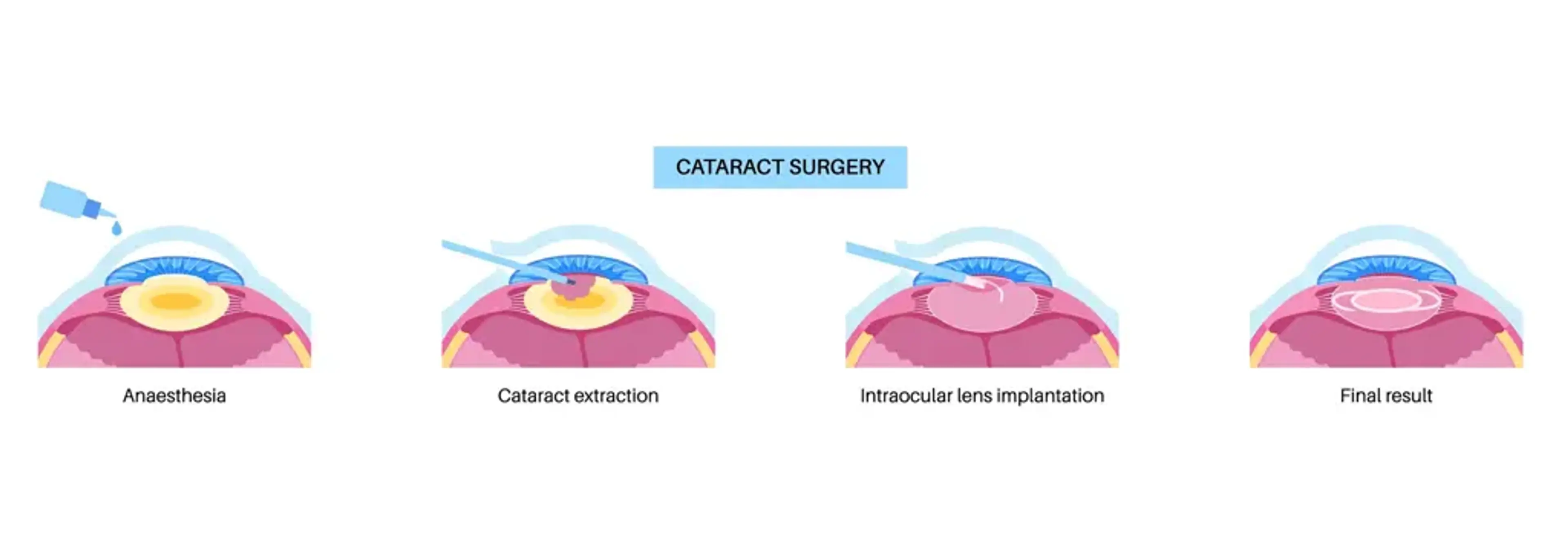
When a cataract is advanced enough to interfere with daily activities, the only effective solution is to remove the clouded natural lens and replace it with a clear artificial one — the intraocular lens, or IOL.
An IOL is a precisely engineered optical device made from biocompatible materials designed to last a lifetime. Once in place, it does the same job your natural lens used to: bending light so it focuses sharply on your retina.
The moment the cataract is removed and the IOL inserted, light can pass through unobstructed again. Patients often notice brighter colors, improved contrast, and sharper detail almost immediately after surgery.
One of the most important decisions in cataract surgery is choosing the right type of IOL. This is not a one-size-fits-all situation. Your daily habits, visual priorities, and even your personality can influence the best choice for you.
At Gangnam Joeunnun Vision Clinic, we conduct detailed pre-surgical diagnostics to recommend the IOL best suited to each patient. The main categories include:
Designed for one focal distance, usually far vision. You may still need glasses for reading or other close work. These are a reliable, cost-effective option for those who do not mind wearing glasses for certain tasks.
These lenses have multiple focusing zones, allowing for near, intermediate, and distance vision. They can greatly reduce or even eliminate the need for glasses, though some patients experience mild halos or glare in certain lighting conditions.
For patients with significant astigmatism, toric lenses correct the irregular curvature of the cornea in addition to replacing the cataract. This can dramatically improve overall sharpness and reduce dependence on glasses.
These provide a continuous range of vision with fewer visual disturbances than some multifocal designs. They are particularly suitable for those who prioritize clear intermediate vision — for example, computer work — while maintaining good distance clarity.
In Korea, where smartphone use, reading, and night driving are daily realities, we often find that a balanced solution between near and far vision is ideal. However, each eye and each patient is different, which is why personalized assessment is critical.
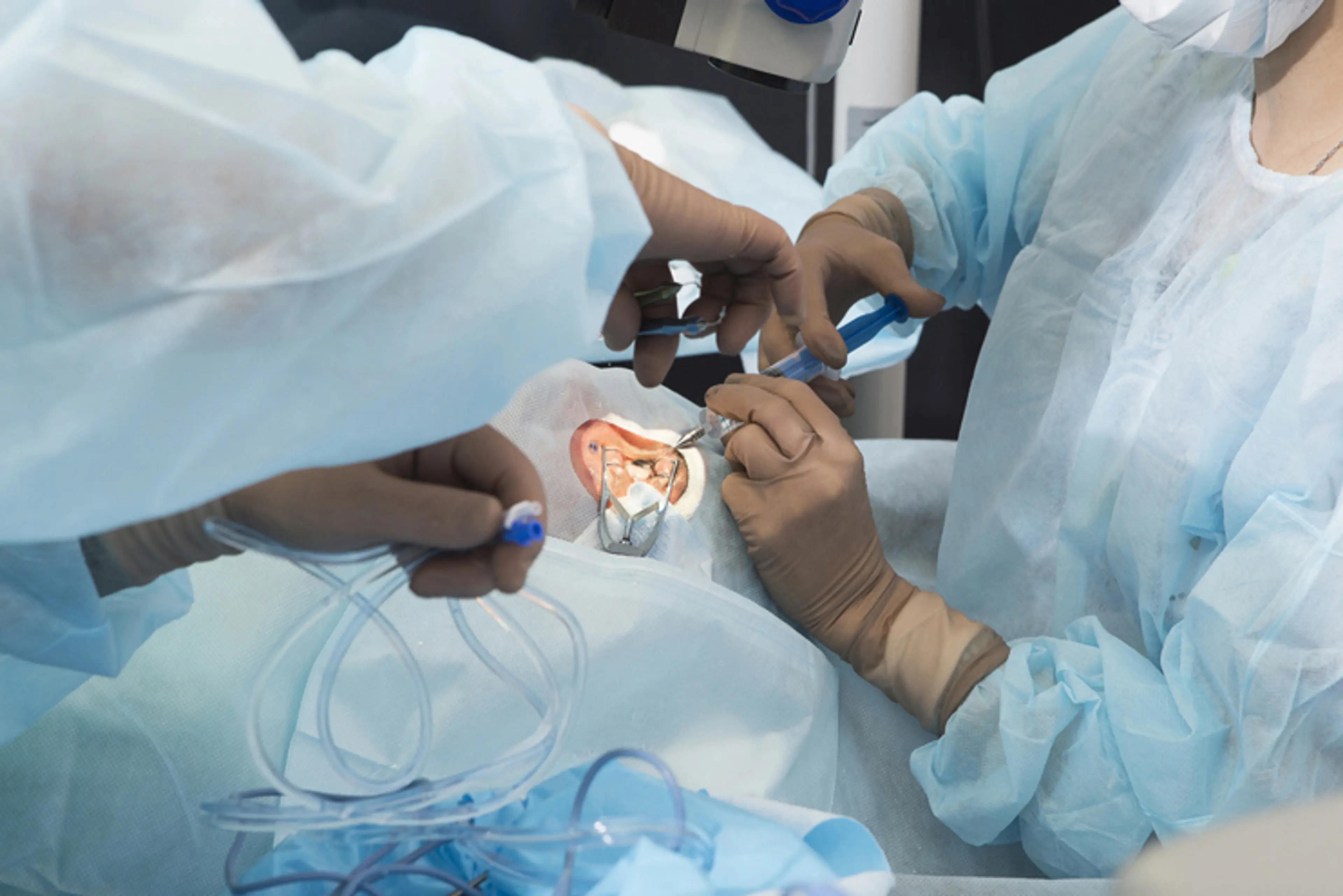
Cataract surgery with IOL implantation is typically performed as an outpatient procedure and is surprisingly quick. Here is what most patients experience:
The entire procedure usually takes about 15–20 minutes per eye, and most patients are surprised by how painless and straightforward it feels.
Recovery from cataract surgery is generally smooth, but it is important to follow your surgeon’s instructions carefully to ensure optimal healing.
During recovery, avoid rubbing your eyes, swimming, or heavy lifting until cleared by your doctor.
Cataract surgery is one of the safest surgical procedures worldwide, with a success rate exceeding 98 percent. Still, as with any surgery, there are potential risks:
Infection
Increased eye pressure
Retinal detachment
Residual refractive error
Glare or halos (particularly with certain multifocal IOLs)
The key to minimizing these risks lies in careful pre-surgical evaluation, precise surgical technique, and advanced technology — all areas in which Gangnam Joeunnun Vision Clinic invests heavily. Dr. Kim Jun-heon’s expertise and the clinic’s use of ZEISS diagnostic and surgical equipment allow for micron-level precision, improving both safety and visual outcomes.
A common misconception is that you must wait until your cataracts are “ripe” before having surgery. While that may have been true decades ago, modern cataract surgery is designed to restore quality of life, not just to treat severe vision loss.
If your cataracts are interfering with reading, driving, work, or hobbies — or if you simply feel limited by your vision — it is worth having a consultation. Acting earlier can often mean an easier surgery and a quicker recovery.
Every eye is unique. Your corneal curvature, retinal health, and even the way your brain processes visual information play a role in determining the best surgical approach.
At Gangnam Joeunnun Vision Clinic, we believe in designing each surgery as though it were for our own family member. That means:
Comprehensive imaging and measurements before surgery
A thoughtful discussion about your lifestyle and visual goals
Careful selection and precise placement of the IOL
Detailed follow-up care to ensure the best possible outcome
This patient-centered approach is what allows us to consistently achieve high satisfaction rates and long-lasting results.
The decision to undergo cataract surgery is both a medical choice and a personal milestone. For many of our patients, it marks the moment they reclaim not just their vision, but also the freedom to enjoy life without the constant limitations of blurred sight.
With modern IOL technology, the benefits go beyond simply removing the cataract. You have the opportunity to improve your overall vision — sometimes to a level you have not experienced since your youth.
If you are preparing for your first cataract surgery, remember that success comes from a combination of skilled surgical hands, advanced technology, and a treatment plan designed specifically for you.